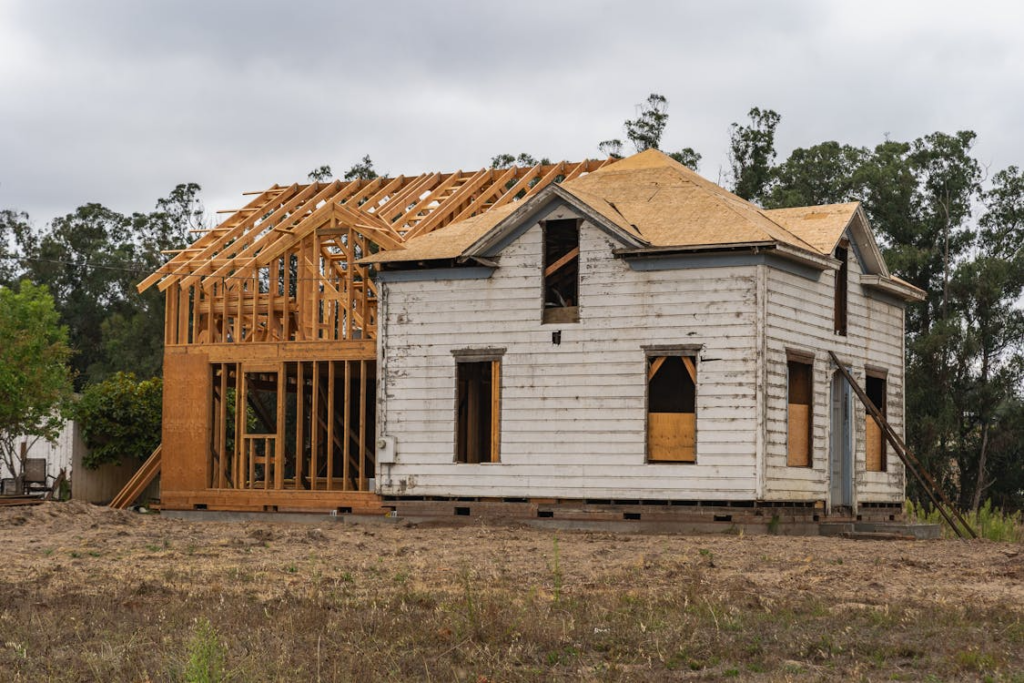

Understanding replacement cost vs actual cash value helps you evaluate whether your coverage matches your expectations.
Insurance policies often use technical phrases that seem interchangeable until you file a claim. “Replacement cost” and “actual cash value” are two of the most important distinctions in property insurance.
The difference between them can determine whether you are made financially whole after a loss or left covering a significant gap.
What Replacement Cost Really Means
Replacement cost coverage pays the cost to repair or replace damaged property with new items of similar kind and quality, without deducting depreciation. In practical terms, this means you are reimbursed based on today’s prices rather than the item’s age.
For example, if a five-year-old television is destroyed in a fire, replacement cost coverage would pay for a comparable new television at current market prices. You would not be penalized for the fact that your old television had already lost value over time.
In homeowners’ insurance, replacement cost applies to both personal belongings and the structure itself. When used for dwelling coverage, it is designed to fund the rebuilding of your home using current construction costs, not its original purchase price.
See How Policy Limits Affect You in Worst-Case Scenarios to evaluate full loss exposure.
How Actual Cash Value Works
Actual cash value (ACV) coverage factors in depreciation. It pays the item’s current value at the time of loss, taking into account age and wear.
Using the same example, if your five-year-old television is destroyed, the insurer would calculate its depreciated value. If the television originally cost $1,000 and is now worth $400 due to age and use, ACV coverage would reimburse roughly that amount, minus your deductible.
For homeowners’ policies, ACV can significantly reduce personal property claim payouts. For dwelling coverage, ACV may not fully fund rebuilding costs if depreciation is applied to structural components.
ACV policies often come with lower premiums, but the tradeoff becomes visible during a claim.
Explore How Insurance Claims Really Get Evaluated to understand depreciation calculations.
Real-World Impact During a Claim
The difference between replacement cost and ACV becomes most apparent after widespread losses, such as storms or fires. If multiple items are damaged, such as roofing materials, appliances, and furniture, the cumulative effect of depreciation can be substantial under an ACV policy.
Some policies offer a hybrid structure. They may initially pay the actual cash value and then reimburse the difference up to replacement cost once repairs or replacements are completed and documented.
Understanding how your policy handles these payments helps you prepare financially. Replacement cost coverage generally reduces out-of-pocket exposure, but it often comes at a higher premium.
Read Understanding Exclusions: The Fine Print That Matters Most before assuming full reimbursement.
When Each Option Makes Sense
Replacement cost coverage is typically more appropriate for primary residences and essential belongings. It aligns to restore your home and lifestyle without absorbing large depreciation gaps.
Actual cash value may be more suitable for older properties, rental properties, or situations where cost sensitivity is a priority, and the risk of underpayment is acceptable.
The decision depends on your financial flexibility. If absorbing depreciation after a loss would create strain, replacement cost coverage may justify the higher premium.
Learn How Often You Should Review Your Insurance Policies to keep coverage aligned.
Reviewing Your Current Policy
Many policyholders are unsure which valuation method applies to their coverage. Reviewing your declarations page and policy language clarifies whether personal property and dwelling coverage are on a replacement cost or ACV basis.
As construction costs and consumer prices fluctuate, replacement cost limits should also be reviewed periodically to prevent underinsurance. ACV coverage, while cheaper upfront, should be evaluated carefully in light of current replacement costs.
The distinction between replacement cost and actual cash value is not technical trivia. It shapes how fully insurance performs when you need it most.
Insurance is designed to reduce financial disruption after a loss. Choosing the appropriate valuation method ensures that your expectations align with your policy’s structure. By understanding how each approach works in practice, you can balance premium savings with realistic recovery outcomes.